Let’s start with the biggest myth.
People assume travel days on a guided RV caravan feel rigid. Like a convoy. Like a military operation. Engines idling in perfect rows waiting for someone to blow a whistle.
That’s not what happens.
Travel days on a caravan are structured – yes – but they’re surprisingly relaxed. Calm. Even… enjoyable. And if you’ve ever white-knuckled your way into a tight campground after six hours of driving, you’ll understand why that matters.
So what actually happens? Let’s walk you through it.
The Night Before – The Calm Before the Roll
Travel days don’t begin in the morning. They begin the night before.
After dinner or an activity, the WagonMaster team gathers everyone for a short travel meeting. It’s not long. Fifteen, maybe twenty minutes. You’ll review:
- The next day’s mileage
- Departure window
- Fuel stops (yes, they’re vetted for big rigs)
- Rest areas
- Arrival procedures
- Any construction or terrain notes
You get printed directions with GPS coordinates and a turn-by-turn guide. Many caravans also use radios or group messaging apps to stay loosely connected on the road.
Here’s the thing – you’re not forced to drive in a tight line. That’s another misconception. You leave within a departure window. Some like to roll early. Others prefer a second cup of coffee and a slower start.
Morning – Engines, Coffee, and Quiet Confidence
Travel mornings feel … different.
There’s movement, sure. Slides coming in. Tow bars being secured. The soft hum of diesel engines warming up. But there’s also this quiet rhythm. No rush. No guessing.
You know where you’re going. You know where you’re stopping. You know someone’s already checked the campground.
That last part matters more than people realize.
When you travel independently, there’s always a little uncertainty. Will the site fit? Is the turn too tight? Is there low clearance near the entrance?
On a guided caravan, that reconnaissance work is done ahead of time. Campsites are pre-assigned. The arrival plan is clear. It removes a surprising amount of mental load.
And honestly? Decision fatigue is real when you’re on the road for weeks at a time.
On the Road – Not a Convoy, Not Chaos
Caravans don’t drive bumper to bumper. That would be stressful and unsafe.
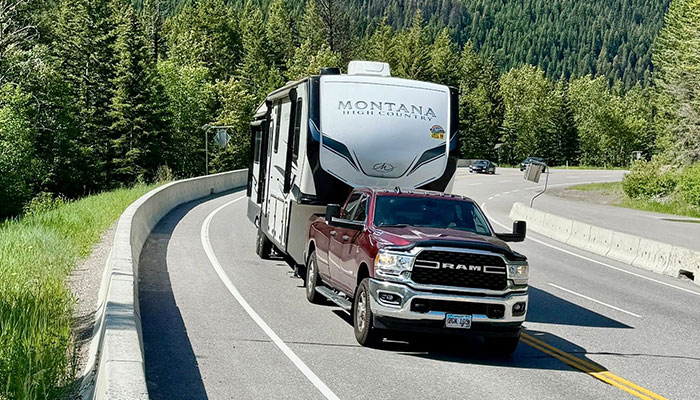
Instead, rigs travel independently along the same planned route. Think of it like beads on a string – connected, but spaced. You might see fellow travelers at a scenic overlook or fuel stop. Or you might not.
The WagonMaster leads the day’s route. The TailGunner departs last, staying behind to assist anyone who needs help. Flat tire? Engine warning light? Slide won’t retract? That’s where the support comes in.
And yes, breakdowns happen. RVs are houses on wheels. Things rattle loose.
But here’s what’s different: you’re not alone figuring it out.
TailGunners are trained for this. They carry tools. They troubleshoot. They coordinate roadside assistance if needed. Sometimes it’s a quick fix. Sometimes it’s a bigger repair. Either way, there’s a plan and you are not alone.
That safety net changes how travel feels.
“What If I Take a Wrong Turn?”
It happens. Even with clear directions, a missed street or late lane change can sneak up on you.
On a caravan, though, you’re not relying on GPS guesswork. You’re following a detailed, turn-by-turn trip log that’s been carefully mapped and driven ahead of time – specifically for RVs.
That matters.
Because those directions are designed to avoid low bridges, tight fuel stations, awkward turns, and the kind of roads that look fine on a screen but feel very different behind the wheel of a 40-foot coach.
And if someone does miss a turn? There’s a plan. You have contact numbers. You have support. You’re not navigating blind through an unfamiliar city hoping your height clearance estimate is right.
That planning isn’t flashy. It’s quiet work. But it shows up on travel days.
Arrival – The Underrated Best Part
Here’s where caravan travel really shines.
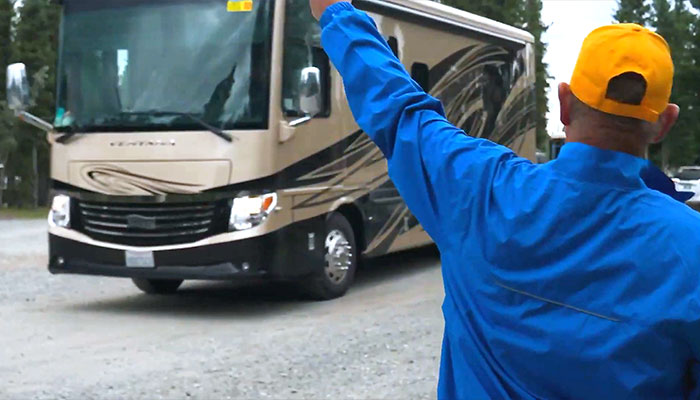
When you pull into the next campground, the WagonMaster team is already there. Ready to welcome you. Available to assist as you get settled.
No circling the park wondering where to go. No guessing which row is yours.
You park. You hook up. You breathe.
And then something subtle happens – travel day tension fades quickly. Because once everyone’s in and settled, it feels like a small neighborhood re-forming in a new place.
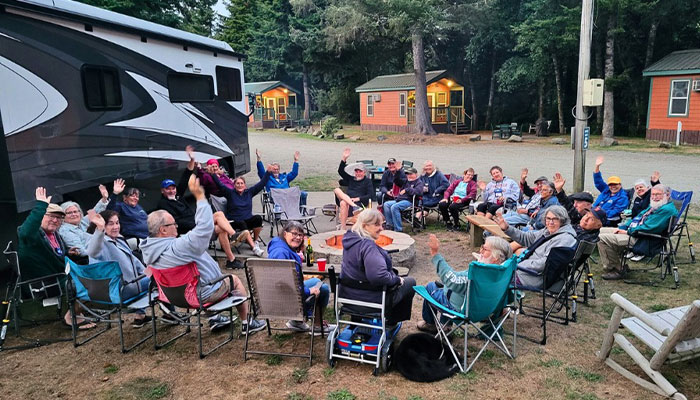
Chairs come out. The campfire flickers to life. Stories get shared. Someone mentions a scenic stop along the way. Someone else laughs about nearly missing the fuel exit (but catching it just in time).
The road becomes part of the experience – not just the gap between destinations.
Structured, But Not Restrictive
Let’s address something honestly.
Caravans aren’t for everyone.
If you love spontaneous detours every afternoon or prefer to set your own pace with zero coordination, independent travel might suit you better.
But if you like knowing the logistics are handled – campsites secured, routes planned, events scheduled – then caravan travel feels liberating rather than limiting.
It’s a mild contradiction, but it makes sense once you experience it.
Less decision-making. More enjoyment.
Why Travel Days Feel Different
On a guided RV caravan, travel days don’t feel like problem-solving sessions. They feel purposeful.
You’re not researching fuel stops on an app mid-morning. You’re not scrolling campground reviews wondering if the photos are outdated. You’re not hoping the site truly fits a 45-foot coach.
The behind-the-scenes planning handles that.
And that frees up energy for what actually matters – the landscapes outside your windshield, the conversations at the next stop, the shared anticipation of what’s ahead.
You still drive your own coach. You still control your pace. But you’re supported. Quietly, consistently supported.
A Quiet Word About Experience
At Fantasy RV Tours, travel days are designed with intention. WagonMasters and TailGunners complete extensive training before ever leading a group. And they were guests first. They understand what it feels like to sit in the driver’s seat.
Routes are scouted. Campgrounds are vetted. Support systems are in place.
Because the goal isn’t just getting from Point A to Point B.
It’s helping you feel confident every mile in between.
And sometimes, that steady confidence is exactly what makes the whole journey work.